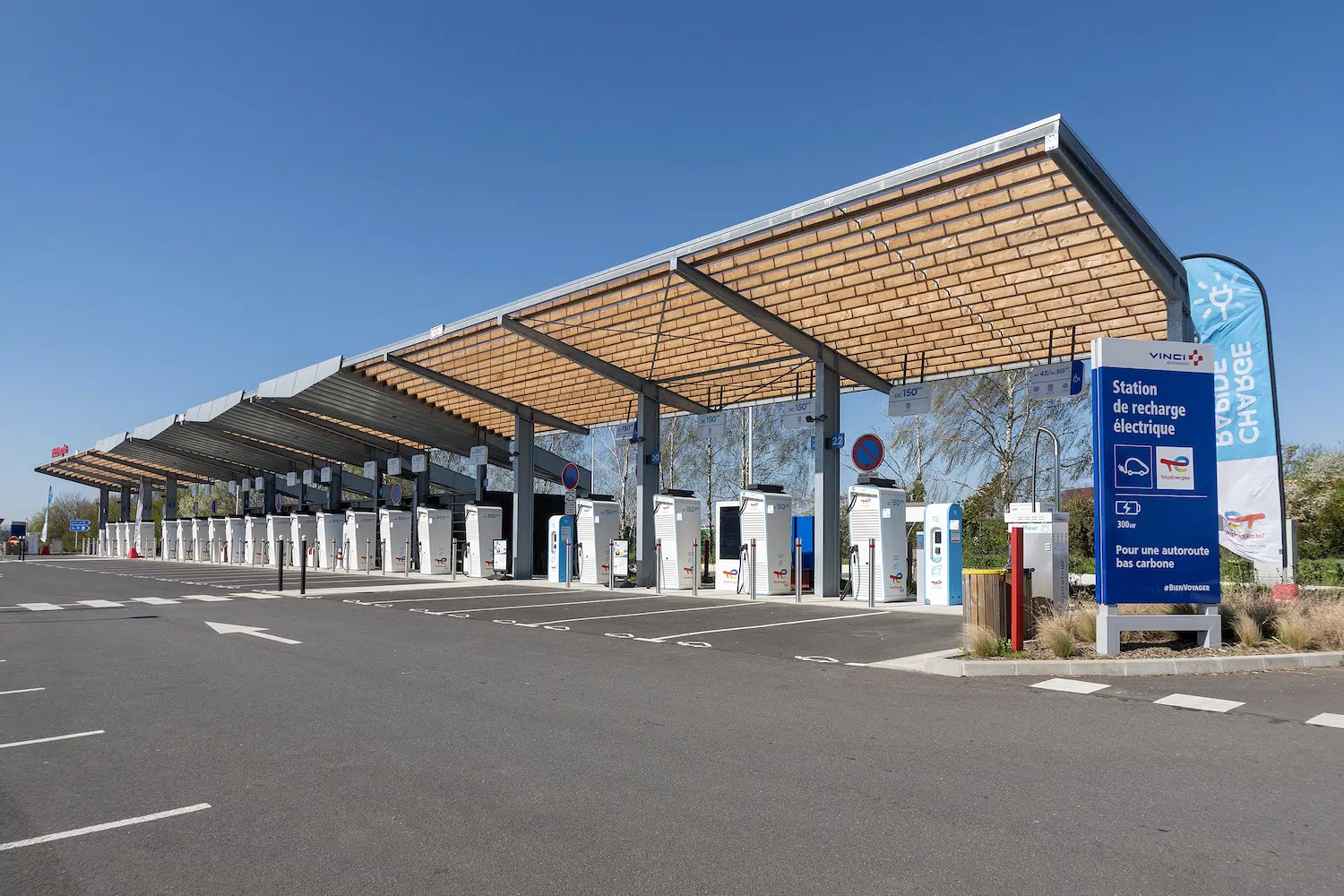
In the EV charging infrastructure sector, accelerating deployments without accelerating photo production creates a significant business blind spot. For operators, installers, and charging networks, having a high volume of regularly produced EV charging infrastructure photos isn't just about documenting sites. It also helps to better market a network, reassure clients, and make charging stations more easily identifiable for users on the platforms where they are discovered.
In EV charging infrastructure, photography is no longer a secondary issue
The EV charging infrastructure market is changing scale. Networks are becoming denser, installations are multiplying, decision-makers are comparing options more quickly, and drivers are choosing their charging points on interfaces where everything happens in seconds. In this context, the situation regarding charging stations can no longer be assessed on a case-by-case basis.
For an electric vehicle charging provider, investing in regular photo production has two very concrete effects. On the one hand, it helps to better showcase an EV charging network, deployment capacity, or quality of execution in the context of a tender or a multi-site project. On the other hand, it improves the visibility of charging stations already in operation on Google Maps, Google Business Profile, Chargemap, PlugShare , and other location platforms.
In other words, photography is no longer simply a visual medium. It is a commercial and operational asset!


Why EV charging station photos have become a business issue
For a long time, many players considered photography as a step on the deployment roadmap: a site launch, a few images, and then nothing more. This logic no longer holds true as soon as a network develops rapidly across multiple cities, different types of locations, or multiple countries.
Because a charging station isn't just about having a charging point installed. It also needs to demonstrate:
- the site environment ,
- ease of access,
- the installation of the terminals,
- signage ,
- the level of cleanliness,
- brand consistency .
Users need to understand where they're going. Partners need to be able to envision the project . Clients need to be able to assess the viability of an EV charging infrastructure deployment . This is when professional photography takes on a new role . It's no longer just for illustration; it becomes essential for making the charging station network visible, understandable, and credible .


Winning contracts: why your visuals matter in EV charging infrastructure tenders
In EV charging infrastructure, part of the growth depends on the ability to convince local authorities, property companies, retailers, private groups, real estate players or even the hospitality sector.
These prospects aren't just buying technical infrastructure. They're looking for a partner capable of:
- deploy properly,
- to adhere to a brand framework,
- adapt to the terrain,
- maintain a consistent level of quality across multiple sites.
This is precisely what professional photos of charging stations make tangible.
When a company presents consistent, clear, and well-framed websiteswith comparable views from one location to another, it demonstrates much more than just charging stations. It showcases a methodology, quality of execution, and the ability to scale up deployment. Conversely, disparate, outdated, incomplete, or illogical photos weaken the sales pitch. They muddy the perception of the network, complicate planning, and can lead to a loss of clarity compared to a better-presented competitor.
Professional photography does not replace the offer, but it influences how it is perceived.


Generating more usage: how photos change the operation of ski resorts
The second lever is also strategic: usage and the user.
An electric vehicle charging station exists on the ground, of course. But it also exists in the interfaces where drivers discover it. Google Maps, Google Business Profile, Chargemap, PlugShare , and other location services have become crucial touchpoints. Users aren't looking for marketing promises. They want quick answers to very specific questions:
- Where is the station?
- Is it easy to spot?
- In what environment is it installed?
- Does the site inspire confidence ?
- Will access be easy once there?
photos of charging stations answer these questions even before arrival. They show the entrance, signage, immediate surroundings, charging point placement, traffic lanes, and visibility from the outside. They reduce uncertainty, streamline the experience, and facilitate the choice.
A poorly photographed station is harder to understand. A well-photographed station is easier to find, choose, and use.


Why a one-off photo campaign is no longer enough in EV charging infrastructure
The real challenge is producing good photosconsistently over time, with a focus on scale. An EV charging network is constantly evolving. New sites open, others are updated, signage changes, environments transform, and the need for dissemination multiplies across corporate websites, sales materials, local platforms, prospecting tools, and operational tools. In this context, a one-off photo campaign quickly reaches its limits.
What is needed is an organization capable of keeping up with the actual pace of the network :
- to launch photo shoots on multiple sites simultaneously,
- to guarantee consistent quality,
- to produce within shorttimeframes
- to power multiple uses,
- update the visuals as the park evolves.
It is this consistency that creates value. It allows for a network to be maintained in a presentable, usable and marketable manner at all times.


What Myphotoagency brings to EV charging infrastructure stakeholders
It is precisely in this area that Myphotoagency provides a suitable solution. EV charging infrastructure doesn't need a site-by-site, artisanal approach. It needs a partner capable of orchestrating multi-site photo productionwith volume, speed, and control.
Myphotoagency already supports industry players such as EVzen, Bump, TotalEnergies, MADIC, and Charging Together. Our value lies not only in photography itself, but also in our ability to make photo production deployable at the same speed as the charging station network.
This involves:
- a network of photographers capable of intervening locally,
- centralized control ,
- consistent instructions ,
- consistent quality ,
- monitoring of site openings, updates and recurring needs.
For an EV charging infrastructure operator, the benefits are immediate: teams save time, sales materials gain credibility, stations operated gain visibility, and the brand gains consistency.


In EV charging infrastructure, photos must finally be scaled up
The electric vehicle charging market is rapidly structuring itself. The networks that will gain an advantage won't just be those that install quickly. They will also be those that best showcase, present, and communicate their presence on the ground. This is where professional photography—because it directly supports the business—becomes strategic.
It helps to secure projects through calls for tenders , to reassure private, institutional, and public partners , and to make stations more visible and easier to understand for users.
When deployments accelerate, photo production must keep pace.


